


Question: What inspired your current Design Final Project? Please include your sketches and diagrams to further inforce your statements.
Architectural Design 04 studio project is to convert a ‘Dewan Orang Ramai’ into a story museum relating to Leprosy disease. Sungai Buloh Settlement. Designing an experiencing museum that can speak for ‘Leprosy’ disease, which has a long history since Industrial Revolution period.
Influenced by the dark ages of Leprosy, they have gone through sadness, disappointment towards their life after they are quarantined in the settlement. Since that, they start to build their own patient ward, shops, houses, prisons, temples, mosques, churches, cemetery and they even have own currency notes. However, the settlement has started to be taken down to replace as part of Uitm University campus. This settlement has existed for years and it should be treasured. Even their history and record can be found in Malaysia archive. The settlement has much more value than a University building in fact. However, the community or the lepers have actually protect their home from being taken down.
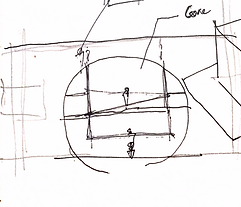
Inspired by the strong community living in a settlement rich in culture, I wanted to create few spaces with few transition point of emotion. Educating the visitors of the transition of life and emotion how they go through to become one strong community. From the sketch below, imagine the perspective towards one point of transition. Lepers patient came from different background, and take same transition door to the settlement. They suffered getting cured, they choose to isolate themselves, represented by isolating box in the sketch, after that they start bonding and merging, make new friends, get married and own a family, go for prayers as normal and live until the end. The unity in the end represents their strong sense of community.


The experience in the museum will be mainpulated within four transition point at different emotion feeling. Breaking down from feeling strange, isolation,bonding to unity.

From first point of view, the light of tunnels have given a vision of isolating pieces of vent block at the lower part of facade. Moving on to the middle part of facade elevation, the distance gap between each vent blocks getting smaller and finally united with the huge light tunnels.

Transiting from first to second point with ramp going throught the dewan, creating visualization of their story getting interesting and higher with climax until the end. That is why ramping up, not down towards dewan.

Transite to second intersection point, visitors get to visual impact with the openings from stage towards the rear side of the dewan, creating grass terrace gives a strong impact of seeing better future at the end. However, before reaching the end of the story, visitors will get to experience the up and down feeling from the second transition point towards third transition point and end up at fourth transition point.

HO XIN YUN 1001541096
LAI HONG JING 1001541101
Story Museum in Dewan Orang Ramai Sungai Buloh Settlement is our current design final project which is an adaptive reuse project for the local leprosy community. At first, we were worry of the disease about the infection or patients. That day ,we meet a primary school’s sport day where they gather at the field right beside the Dewan when we doing our site visit by coincident.
How?
How to let people respect the patients but not despise them? The intention for my design is to let people aware of the determination of the leprosy patient in Sungai Buloh. How they build up their community within a built settlement isolated from other community.
Based on observation and analysis , the Dewan Orang Ramai built with some unique design and construction detail to give the leprosy victims. In my opinion, Dewan Orang Ramai is just a normal community hall without the leprosy patient to give them identity or historical value. My idea is to create a juxtaposition structure to show the conflict between human perception to the disease but also reflect the vitality of leprosy patient bring to the Dewam Orang Ramai.
The sense between proportion , brightness , sound and pattern reflect the space. An adaptive reuse design basically reflect the conflict of existing structure. New movement , human flow and material are implement into the design to show the contrast between new and existing design.


I see no worry or sad on the children’s face its all because of they don’t know about the disease. But the fact is the leprosy disease is no longer a threat to us and we shouldn’t afraid of it but to respect it. What really inspired me , is the people perception before and after knowing the disease inspired me. What we think is not really what they like.
A design avoid to bring back the negative history of the community but to show positive , determination , strength of the community. To tell a story about
the place would not be better without the leprosy patient.


What inspired your current Design Final Project? Please include your sketches and diagrams to further inforce your statements.
After so many different kind of blog question, I think I found this question is the hardest and headache among the others.
Firstly, I want to do a short introduction about our final project. We are actually asked to convert the Dewan Orang Ramai into a Story Museum which is about the leprosy diseases. The mission we are asked to do is actually very simple which is trying to apply some architectural element to allow the visitor to experience the diseases.
What really inspired my current design project? I think one of the reasons is the energy and mind set of living of the leprosy victim that they have and how they want to bring the spirit to us. I saw how they deal with the pain just to live happily for the rest of the life. Therefore, I would like to propose a space where the visitor could get motivated and inspired by the victim.
Other than that, I was also inspired by the journey of the victim. The ups and downs throughout their life. Therefore, I want to provide an experience which is based on the journey of their life. Firstly, a little stress and harsh and after receiving treatment, only they get better and better. Therefore, an experience based on this 3 feeling I guess it can truly express the feeling to the visitor.


HWAN CHING SHEONG
1001541143
This semester, we are required to design a museum to tell people what is leprosy. And its a project that to redesign a
existing building.
What inspired my current design was the idea the circulation that bring people to my building to feel the story of the whole
topic for the architecture. My idea which is to let people feel adventures to explore when they intent to enter my building
which lead them to a space where they suppose to feel what the leprosy patient feel which is being ignored like a hidden
shadow that has no attention from people. Only available to see how’s other people live their normal life. Secondly them
come to the place where they should feel being relaxed.
The concept of it is to able to synchronize the feeling of the
leprosy patient. Which hopefully people will understand it
through walking through the museum. I took the idea from a
famous jewish museum. The architect designed a empty
walkway full with metal facelike plate. The emotional that gave
to people influenced how strong is the architecture without
using fancy design or skinning effect to the interior. Compared
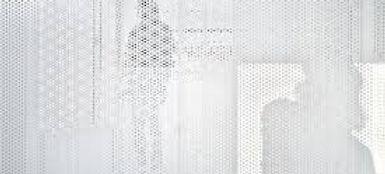
to my current design. I used a perforated metal sheet to create
the feeling of fog. Which i refer to one of my case studies
‘Distance of fog’ - Studio Green Blue.
Hopefully to let people feel lost and lonely inside the memory
spaces.
And for the structural construction . Because of the existing building was an important and memorable building for most of the patient. We are restricted or to say discouraged to change the whole facade of the building . So instead of changing the facade, I used the timber to create the new structure around the building adding light weighted material to create the
feeling for the architecture exterior look. Without changing most of the existing wall design. From outside they will look
different, when you go nearer to explore. You will realize that it’s actually a new creation that respecting the old design.

For the structure material. I decided to use some H Beams and mainly are reclaimed timber. Why timber ?
From my point of view, I do believe timber create feeling of
past memory. From the eastern architecture history we know
timber was used most as a building component. And that i
hope to create to able people to make them feel that this
building is related to the past .
Which is was related to the past in actual fact.
Basically I found my construction material from a case studies - Reclaimed Timber in Langkawi . A retreat house.


So this is basically my whole intention of design the story museum from the plan to the elevation and to the material of it.
The feel of people inspired me the most to create such architecture.


LIM WINN SERN
1001541161
The first that comes to our mind when we heard about the background of Sungai Buloh settlement, was a quarantine area for leprosy victim. But it is so contradicting when we arrived to the site, it was totally opposite of what comes in our mind.


Therefore, the contradiction inspires me to have an idea of making contrast on the site. A museum is to tell the past of something, a place for visitors to have an idea or understanding of certain history and experience it.
So, the idea is using the contrast to make them recall of the stages of the leprosy victim develop the settlement. Spaces that are contrast towards the outside environment, a spiritual twist of inside and outside. The stages help to generates the space zoning, and the feeling to create for the space, to walk back the time.

Stage 1, the shattered hope, is when they know Sunga buloh settlement is their only hope, and the first they was very undeveloped place, still they carry the hope until they see the hope is not solid. Stage 2, treatment, the understanding of the victim suffer, they used to stuck in a clinic in order to heal and not allow to go out, until the disease is under controlled. Stage 3, home, after understanding the behavior of disease they are allow to stay on the own without hospitalize, but they thought they could get back to their own home but instead their family doesn't care about anymore, the separate from the outside world. Stage 4, Activity, they started to find activity that they could do and make for living, planting is their main activity, space of less sunlight showing the plants is growing under a harsh condition reflects how they started to plant. Each spaces showing the contrast on current sungai buloh, and the deep wound inside of those victims until today. The development of the settlement by the victims.


TAN YEONG EN
1001231238